Friday, May 7, 2010

Lotus Esprit GT1 Cars Pictures

Lotus Esprit GT1
The Maserati Merak was an Italian sport car introduced in 1972, essentially a junior version of the Maserati Bora. It substituted an all new Maserati designed quad-cam V-6 motor (also shared with the Citroen SM) for the Bora's larger V-8, resulting not only in a lower cost, but room for a small backseat and better handling due to lower weight and a better front/rear weight distribution.

History

Citroën era Merak

The first Merak was designed during the Citroën ownership of Maserati (1968–1975). It featured a 3.0 L Maserati V6 (190 hp) engine, also used in the Citroën SM.

The mid-engine Merak used the Bora bodyshell, but with the extra space offered by the smaller engine used to carve out a second row of seats, suitable for children or very small adults.

Other Citroën parts used for the Merak included the SM's dramatic dashboard and the hydraulic brake system. In 1977 these parts were supplanted by more conventional units.

GEPI era Merak

In 1976 Maserati introduced the more powerful and lighter Merak SS. Only 652 were made until production of the SS stopped in 1982. Its engine produced 15% more power, raising horsepower to 220 hp (164 kW) and weight was reduced by 152 kg to 1,400 kg, resulting in a top speed of 152 mph (245 km/h). After 1977, the Merak SS was bestowed with the interior and dash of the Maserati Bora. The Merak SS also saw a return to traditional hydraulics, eliminating the last of the Citroen high pressure system.

DeTomaso era Merak

In 1977, during DeTomaso's ownership of Maserati, another version of the Merak called the Merak 2000 was introduced, which featured a 2.0 L V6 with 170 hp (127 kW). This version was built mainly for the Italian market where a newly introduced tax law penalized cars with an engine capacity of more than 2000 cc.

Aesthetically, the Merak differed from the otherwise identical Bora mainly in sporting glassless flying buttresses instead of the Bora's fully glassed rear.

The Merak went out of production in 1982.

Lotus Esprit GT1
Lotus Esprit GT1
Lotus Esprit GT1
Lotus Esprit GT1
Lotus Esprit GT1
Lotus Esprit GT1

Lotus Esprit GT1

Lotus Esprit at Le Mans

After considerable success with the Lotus Esprit X180R at the American SCCA races, Lotus decided to race the Stevens shaped S300 Esprit in Le Mans. After many Lotus successes in Le Mans during the 1950's, (and absent during the 1960's, 1970's and 1980's), Lotus decided it would be good idea to enter Le Mans again and promote the Esprit. They ran 2 S300 Turbos in the 1993 and again in 1994. Unfortunately they had little success with the Esprit. Although the cars ran well during the race, they couldn´t be cooled sufficiently during the tyre changes and driver swaps. The engines overheated and the cars were retired.

Lotus Esprit at Le Mans 1993

Lotus Esprit S300 Le Mans 1993

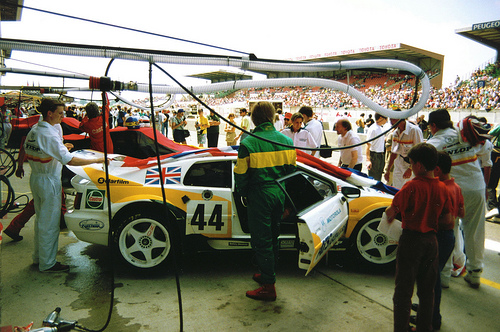
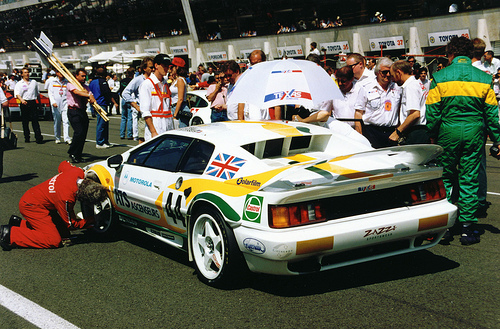
Car No 44 driven by Richard Piper of Great Britain and Olindo Iacobelli of France. The car was prepared by Lotus Sports and Chaberlain Engineering and were 39th. on grid. The Esprit S300 did 162 laps and retired with head gasket failure.

Lotus Le Mans 1993

Lemans_Lotus_Esprit

Lotus_Esprit_Le_Mans

Esprit_Le_Mans_1993

Esprit_Le_Mans

Esprit_S300_Le_Mans

Click on image to enlarge

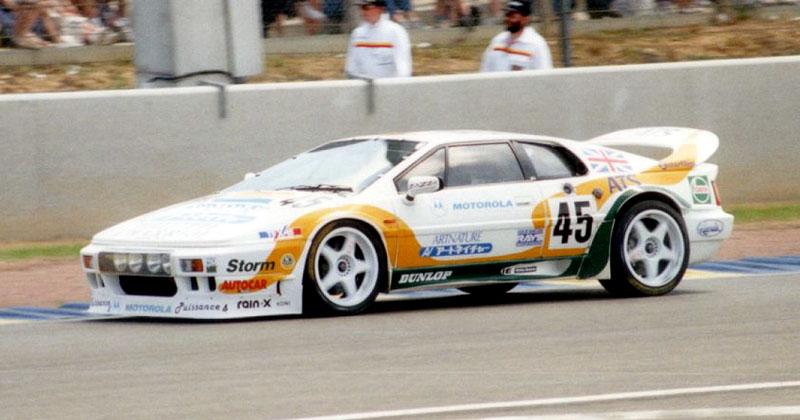
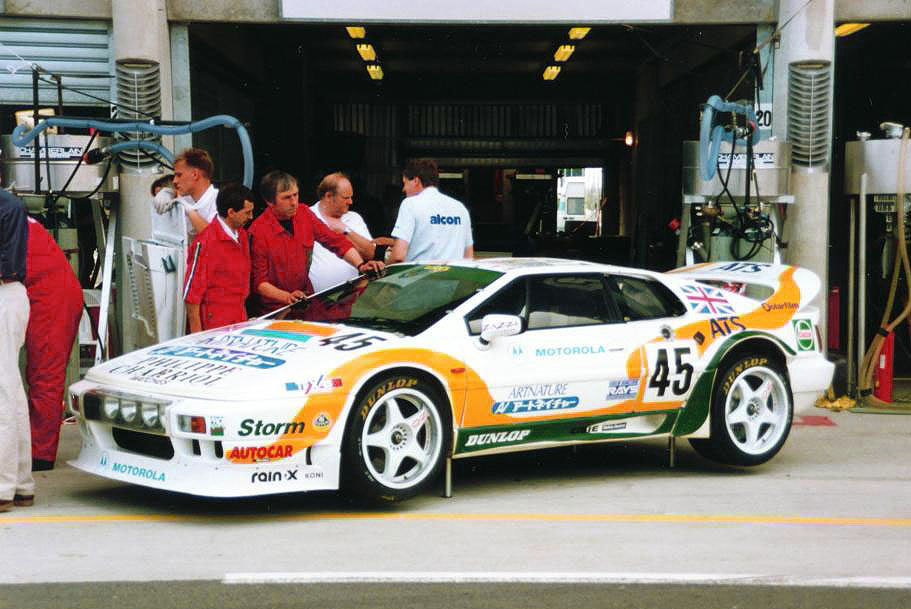
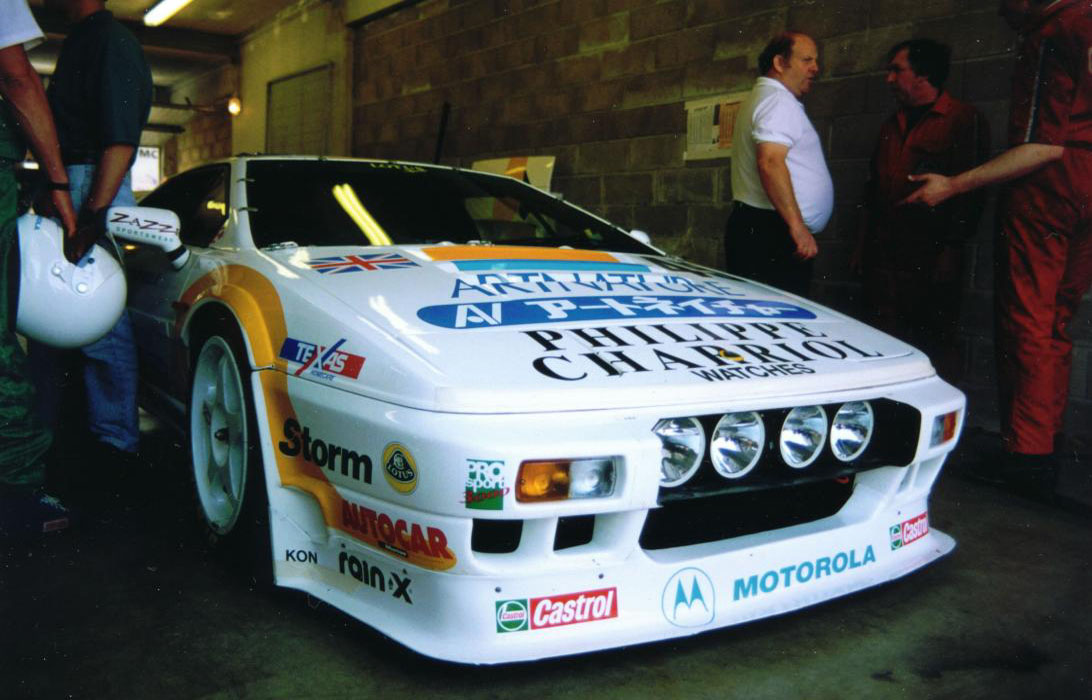
Car No 45 was driven by Yojiro Terada of Japan, Thorkild Thyrring of Denmark and Peter Hardman of Great Britain. The car was a modified Lotus Esprit Sport 300 and was prepared by Lotus Sport and Chamberlain Engineering. The car was 42nd on the grid, however retired after 92 laps with engine failure.

Lotus Esprits at Le Mans 1994

Lotus Esprit S300 Le Mans 1994

The 2 Lotus Esprit S300's before the start of the race

Lotus Esprit S300 Le Mans 1994

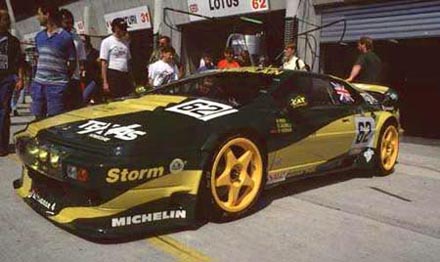
Lotus Esprit car 62 was driven by Richard Piper and Peter Hardman of Great Britain. The Lotus Esprit S300 was also prepared by Lotus Sport/Chamberlain Eng and was unfortunately involved in an accident on lap 45 lap.

Lotus Esprit S300 Le Mans 1994

Car No 61 was driven by Thorkild Thyrring of Denmark and Klaas Zwart of the Netherlands. The car was again prepared by Lotus Sports and Chamberlain Engineering. The Lotus Esprit S300 Turbo again failed to finish, completing 42 laps.

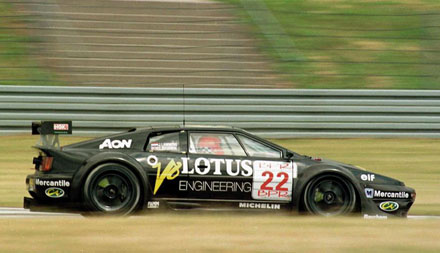
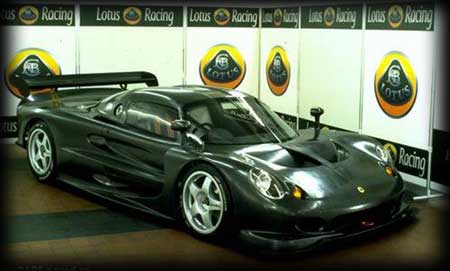
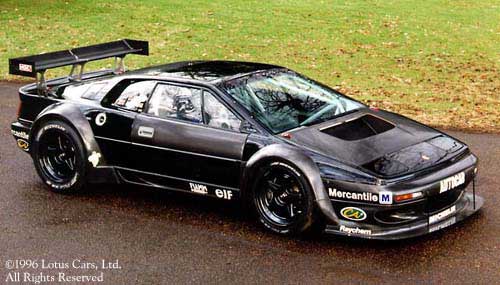
Lotus was to continue entring the Lotus Esprit at Le Mans. In 1996, Lotus entred the Lotus Esprit V8 GT1 car at Le Mans.
Ready to Drive: 1979 DeTomaso Mangust


This Mangusta is a very original driver and looks amazing in red with factory alloys. The paint and interior show some signs of use but it is offered by a reputable DeTomaso dealer. Find it here on eBay out of Orange, California.
We went back and forth on which photo to place first vs. second. The rear openings are the signature feature, but the front end of the Mangusta is just so perfectly designed. We still want one of these more than a Pantera, and with the driver condition of this car it can deliver the experience but can be had for less than the restored examples.

1969 DeTomaso Mangusta Front
1969 DeTomaso Mangusta

Thursday, May 6, 2010

Mazda Furai Concept

mazda_Furai-Concept

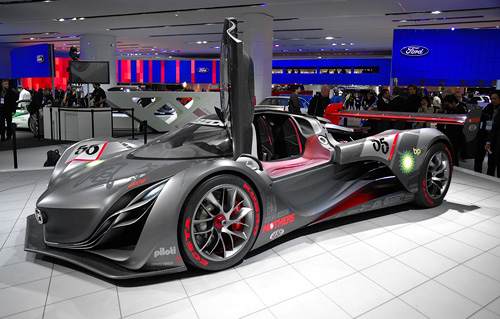
The Mazda Furai is a concept car revealed on 27 December, 2007 and manufactured by Mazda.[1][2] A teaser image of the vehicle was released on 11 December, 2007.[3][4] The Furai officially debuts at the 2008 North American International Auto Show in Detroit.[5]


The Furai meaning "sound of the wind", is the fifth and last of the Mazda Nagare line of concept cars that have been made by Mazda since 2006. The chassis is based on the Courage Compétition C65 Le Mans Prototype that Mazda last used to compete in the American Le Mans Series, two seasons previously[3] and is designed to use E100 ethanol fuel, it is powered by a new generation 3-rotor wankel engine that puts out 450 brake horsepower (340 kW). The engine is developed and built by renowned rotary tuner, Racing Beat, who also built the car's rotary-shaped muffler canister.[6]

The car bears the #55 number that of its 1991 24 Hours of Le Mans winning ancestor, the 787B. Unlike many concept cars, the Furai is fully functional and is currently being tested at various tracks. It has run at Laguna Seca and Buttonwillow.

Head designer, Laurens van den Acker, has stated in an interview with Top Gear magazine that there are possibilities of the Furai being used for racing in Le Mans, and he also has strong hopes that the car could be brought to the market
mazda_Furai-Concept
mazda-furai
mazda-furai
Mazda_Furai_Picture
mazda_furai
mazda furai-concept
mazda_furai

2008 Ford Mustang Bullitt

2008-ford-mustang-bullitt

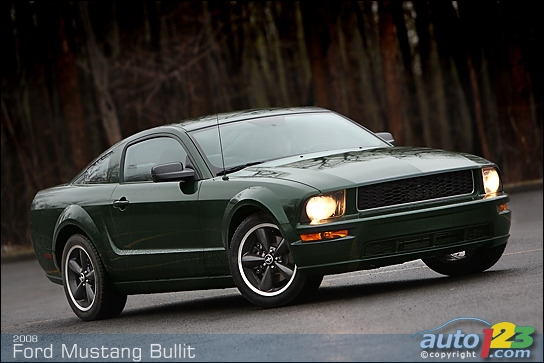
The Ford Mustang is an automobile manufactured car by the Ford Motor Company. It was initially based on the second generation North American Ford Falcon, a compact car.[1] Introduced early on April 17, 1964,[2] the 1965 Mustang is the automaker's most successful launch since the Model A.[3]

The Mustang created the "pony car" class of American automobile — sports car-like coupes with long hoods and short rear decks[4] — and gave rise to competitors such as GM's Chevrolet Camaro,[5] AMC's Javelin,[6] and Chrysler's revamped Plymouth Barracuda.[7] It also inspired coupés such as the Toyota Celica and Ford Capri, which were imported to America.


2008-ford-mustang-bullitt
mustang_bullitt_2008
ford mustang-bullitt-2008
2008-Ford-Mustang-Bullitt

Tuesday, May 4, 2010

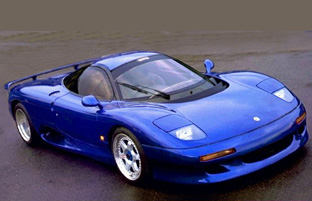
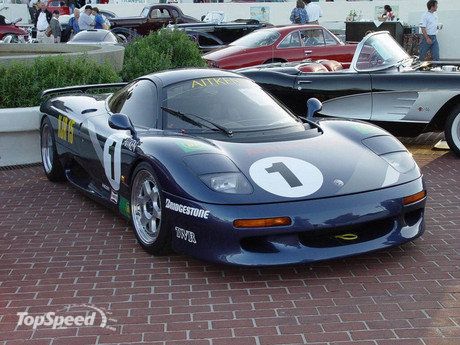
Jaguar XJR-15 Cars Pictures

Jaguar XJR-15

The Jaguar Sport XJR-15 is a RMR layout sports car produced by British automaker Jaguar between 1990 and 1992. Only 50 were made, each selling for US $960,165. Based mechanically on the Le Mans-winning Jaguar XJR-9, the car had an aerodynamic body styled by Peter Stevens, who later went on to style the McLaren F1.

The car's production was announced in a press release on November 15, 1990. It was then built by Jaguar Sport in Bloxham Oxfordshire (a subsidiary of TWR) England from 1990 to 1992. While all are now privately owned, some were built for professional racing.

The mid-engine, rear-wheel drive sports car is powered by a 450 hp (336 kW), naturally aspirated V12 engine of 5993 cc, and has a 6-speed manual, unsynchronized transmission (a 5-speed, synchromesh transmission was also available as an optional extra). The XJR-15’s chassis and bodywork are composed of carbon fiber and Kevlar, and its engine features an advanced electronically managed fuel injection system. The XJR-15 has a 0-60 mph time of 3.9 seconds and a (gearing limited) top speed of 191 mph (307 km/h).

Because of its V12 engine, power-hungry buyers saw the XJR-15 as an attractive alternative to the Jaguar XJ220, which was powered by a twin turbo V6. The XJ220 was also a limited production vehicle, of which 281 were built.

The XJR-15 stemmed from a concept car by Jaguar Sport and Tom Walkinshaw Racing (TWR) called Project R9R. The R9R was developed by Jaguar Sport for the purpose of testing the endurance of carbon and plastic bodywork at high speeds. It was based mechanically on the V12-powered XJR-9, which won the 1988 Le Mans. After thousands of miles of testing and thorough analysis, the R9R went into production as the Jaguar XJR-15 in 1990.

According to a press release by Jaguar Sport, it was built specifically with the 1991 Jaguar Sport Intercontinental Challenge in mind: a three-race competition held throughout the year as support events for the 1991 Formula One Grand Prix at Monaco, Silverstone, and Spa-Francorchamps.

Sixteen XJR-15s were entered in each of the first two events. The winner of the third and final race, Armin Hahne, was awarded a cash prize of US$1 million.

While Jaguar Sport never exported the XJR-15 out of Europe, at least three are known to have made their way to the United States. One was sold at the Pebble Beach Concours d’Elegance in 2001 for US$176,000. Another was sold at Pebble Beach in 2003 for US$154,000 (which was, incidentally, alongside a Jaguar XJ220 which sold for US$157,500).

The most recent was sold at the Bonhams & Butterfields Auction in Carmel, CA in August 2004. It is reported to have been sold to a private collector for around US$175,000. The auctioned car in question was originally ordered in 1991 by British pop music producer Matt Aitken, one of the few owner-drivers participating in the Intercontinental Challenge.


Jaguar XJR-15
Jaguar XJR15
Jaguar XJR15
Jaguar XJR15
Jaguar XJR15
Jaguar XJR15

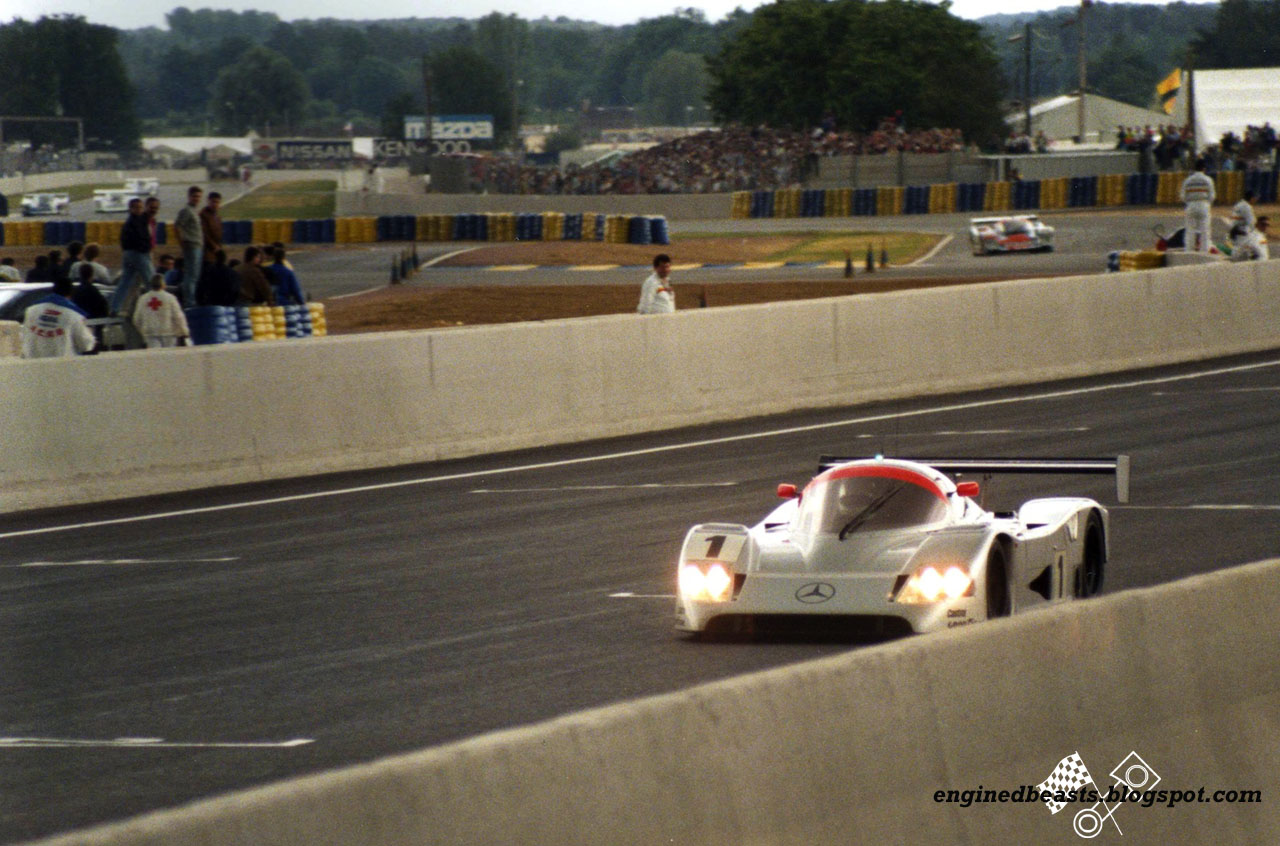
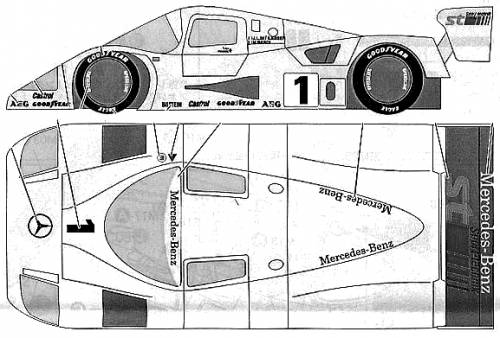
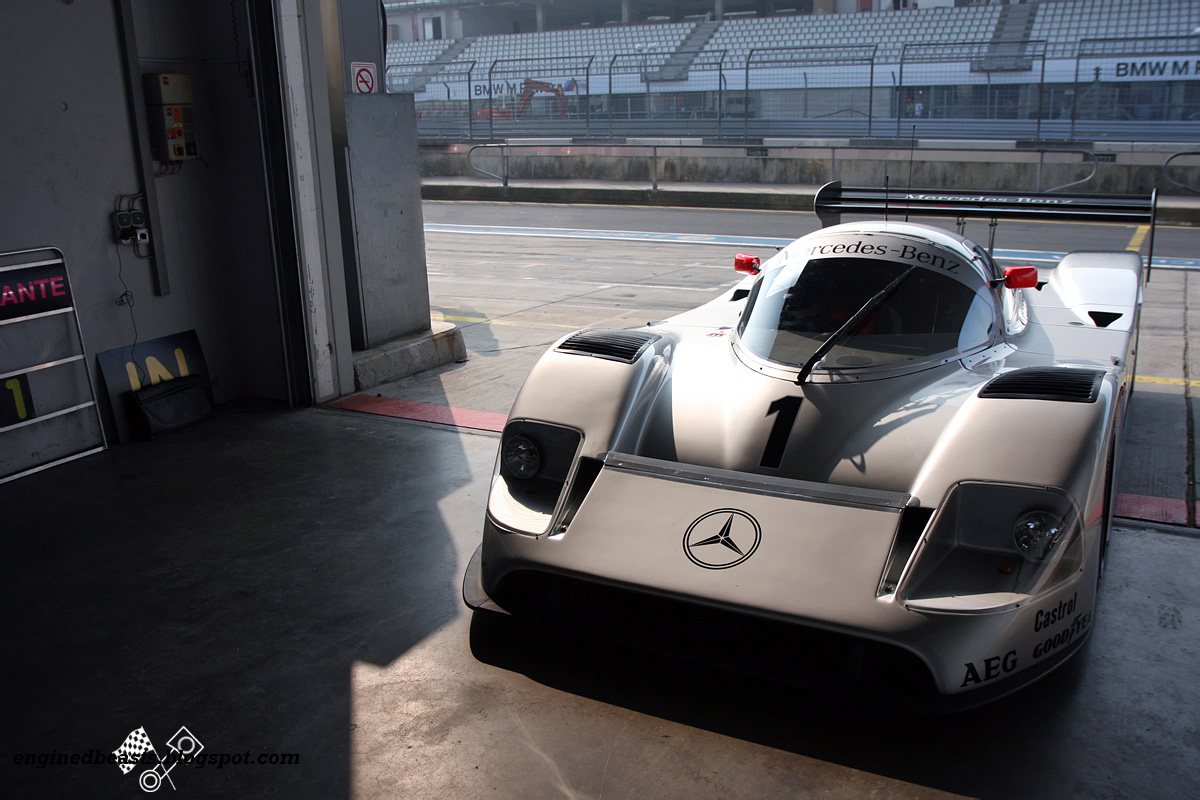
Mercedes Benz SAUBER Pictures and Images


The Mercedes-Benz C11 was a Group C prototype race car introduced in 1990 for the World Sportscar Championship. Built by Sauber as a successor to the Sauber C9, the C11 used the same Mercedes-Benz M119 5.0L Turbocharged V8 from the C9. It was the first time that Mercedes-Benz chose to put their name on the car, instead of simply using Sauber.

Debuting at the first race of the 1990 World Sportscar Championship season, the car did not actually race, choosing instead to run only in practice while the team used the reliable C9 from the previous year. However, for the 2nd race the C11 did race, and was able to successfully come home with first and second. Throughout the rest of the season, the C11 won all but one race and easily took the team's championship for the year.

Although Sauber-Mercedes had been successful in winning the 1989 24 Hours of Le Mans, the team choose not to defend the title in 1990 due to the race not being part of the World Sportscar Championship schedule. The team chose instead to concentrate on winning the championship.

Although the C11 was to be replaced by the Mercedes-Benz C291 for the 1991 World Sportscar Championship season, problems with the C291's new engine led Mercedes-Benz to continue to campaign the C11 alongside the C291. The C11 was able to gain three more class wins in the 1991 season before the C291 fully replaced it.

It should be noted that the reason that Sauber skipped from C9 to C11 is due to the difficult pronunciation of C10 in German, with C and 10 being pronounced nearly identically.

Mercedes-Benz Sauber
Mercedes Benz SAUBER